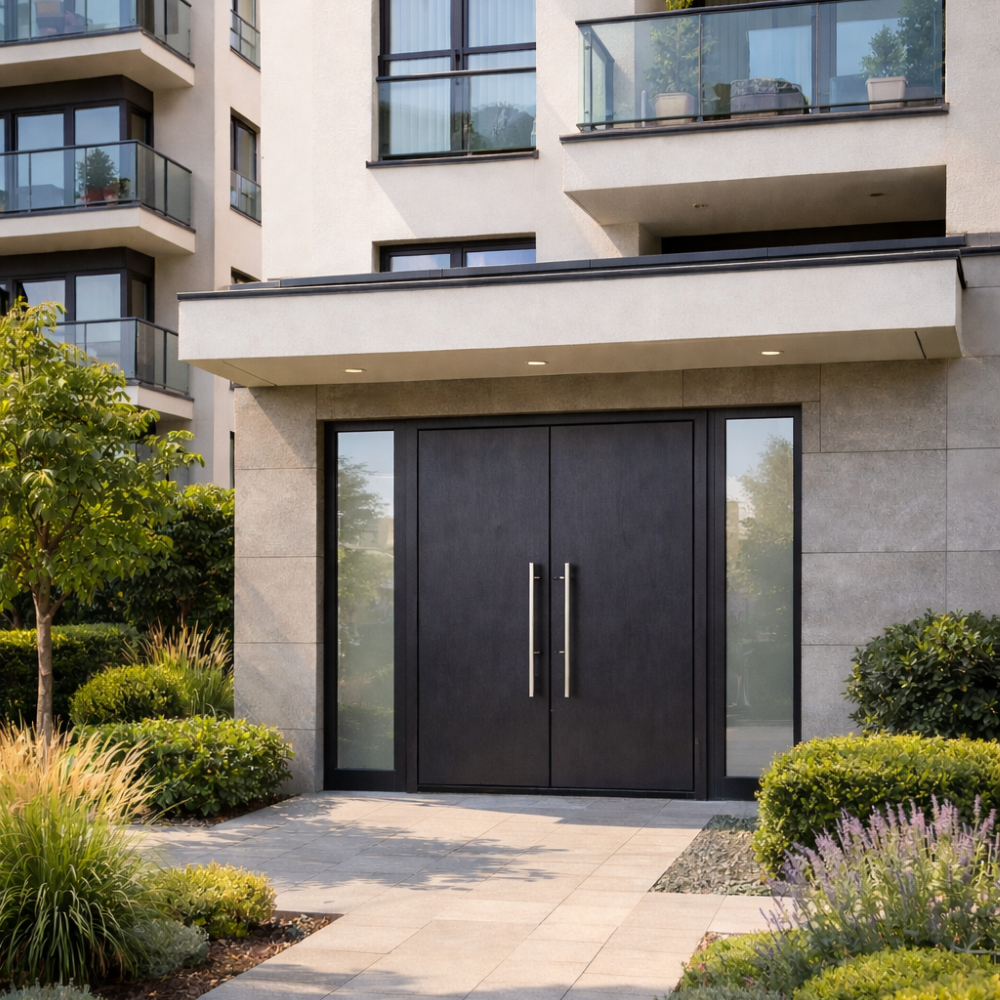
Why Do Modern Door Panels Place Increasing Demands on Sandwich Panels?
For many years, the construction of sandwich panels used in entrance doors was based on solutions that performed well under standard operating conditions. However, the door industry is evolving rapidly, and with it, the requirements placed on materials are changing as well.
Higher building insulation standards, airtight installation systems and the growing popularity of dark decorative finishes mean that modern door panels operate under much more demanding conditions than they did just a few years ago.
The Importance of Sandwich Panel Symmetry
One of the fundamental principles of sandwich panel design is maintaining a symmetrical structure. This means using facings made of the same material and with the same thickness on both sides of the insulating core.
This is not accidental. Every material has its own coefficient of thermal expansion, and some are also sensitive to changes in moisture. If one side of the panel behaves differently from the other, internal stresses may develop within the structure, potentially affecting its geometry.
How Have the Operating Conditions of Door Panels Changed?
The behaviour of a sandwich panel is influenced by many factors, including:
- high thermal insulation standards in modern buildings,
- significant temperature differences between the exterior and interior sides of the door,
- dark decorative finishes exposed to intense solar heating,
- south and south-west facing installations,
- airtight installation systems.
It is important to remember that a door panel is a moving component. Unlike the door frame, which is permanently fixed to the building structure, the door leaf is constantly exposed to changing weather conditions and everyday use.
Under these circumstances, the development of internal stresses is a natural consequence of the physical properties of the materials involved.
How Can the Effects of Internal Stresses Be Reduced?
One approach is to optimise the construction of the sandwich panel itself.
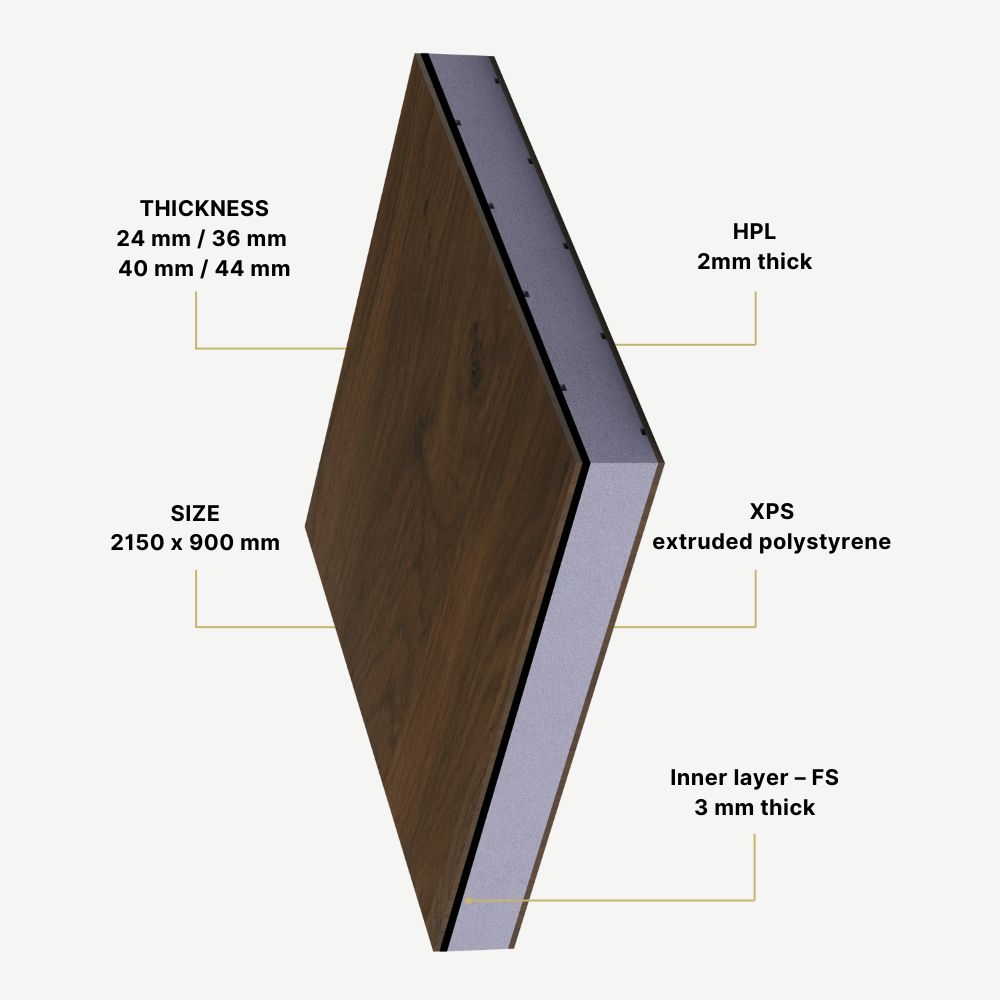
In response to the increasing demands of the market, we developed the HPL FLEXSTAB sandwich panel. Its design incorporates a dedicated FS compensating layer, positioned between the external facing and the insulating core.
This layer acts as a stabilising element and:
- reduces stresses caused by thermal expansion,
- allows the external facing to move more freely,
- limits the transfer of stresses throughout the panel cross-section,
- improves dimensional stability and long-term flatness.
The Evolution of Sandwich Panel Technology
The growing demands of the market mean that the development of sandwich panels is no longer limited to changing facings or core materials. Increasing attention is now being paid to the design of the entire layer structure and the way individual materials interact with one another.
In modern door manufacturing, the durability and stability of the finished component depend on many interconnected factors. A properly engineered sandwich panel construction makes it possible to adapt the product more effectively to the conditions in which it will operate for many years.
Polecane wpisy
-
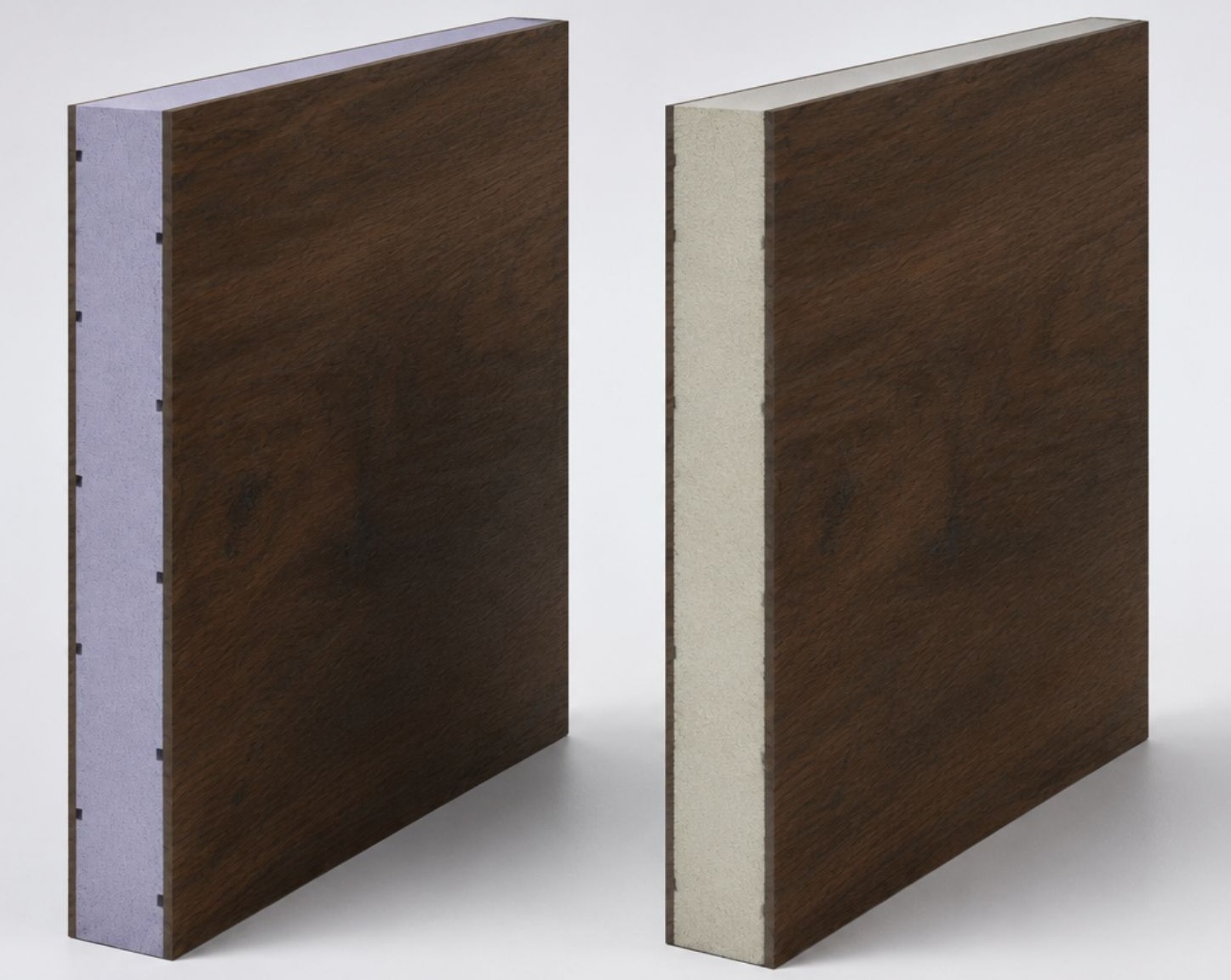
XPS or PUR? How to Choose the Right Core for a Sandwich Panel
The core is the invisible part of a sandwich panel, yet it is largely responsible…
-
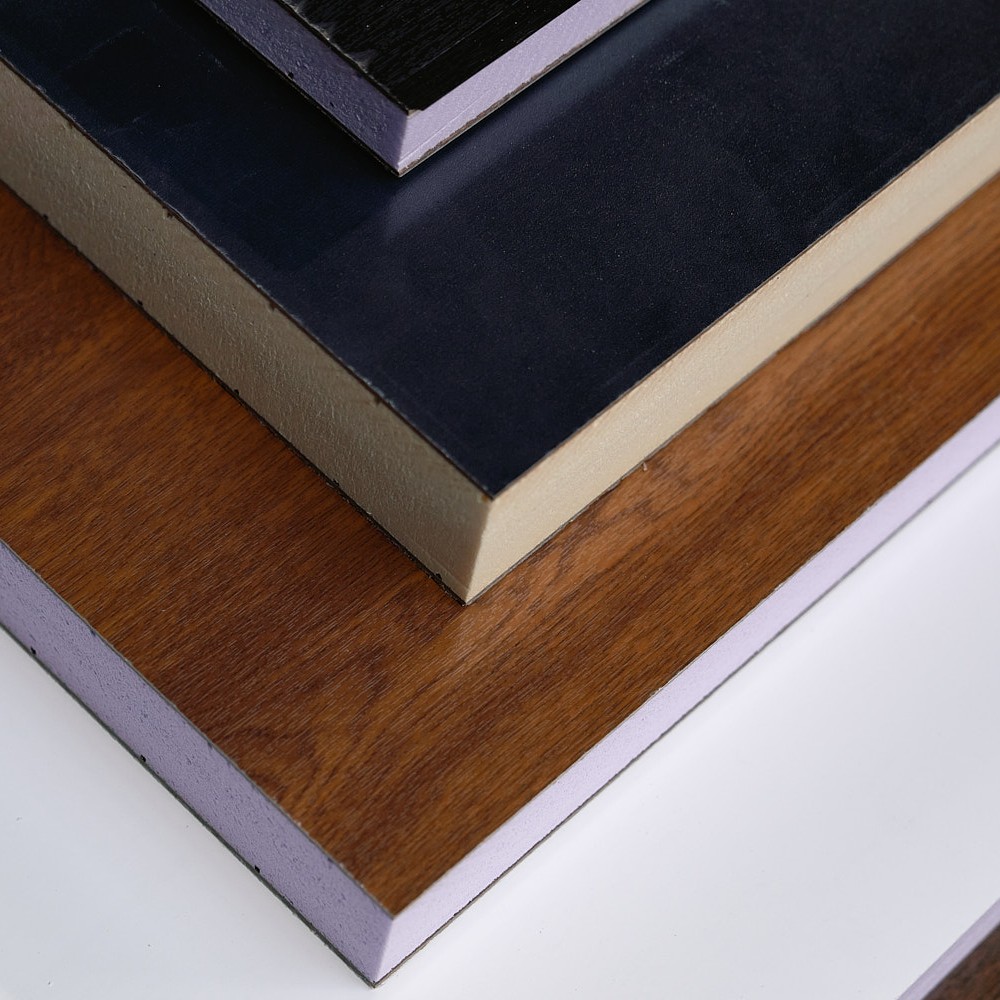
HPL, GFK/ GFRP/ FRP, PVC, Aluminium or Steel – How to Choose the Right Facing for a Sandwich Panel?
When designing a sandwich panel, it is easy to focus on the core thickness or…
-

LB THERM Expands Its Distribution Network Across the Baltic States
We are consistently strengthening our presence in international markets. As part of this strategy, we…